How much should I feed my dog? Guide by age, size and activity

Minutes reading
Published on 15.10.2026 · Updated on 19.10.2026Providing proper nutrition for dogs means giving your dog the energy and nutrients it needs each day, without overfeeding or underfeeding.
To calculate the right amount of food for a dog, it is necessary to consider several factors, including the animal’s size, age or life stage (puppy, adult or senior), and physical activity level (low, moderate or high).
There is no single amount of food that is suitable for every dog. Start with the feeding guide for the chosen product, taking your dog’s age, expected adult size, activity level and body condition into account. Measure each daily portion carefully, monitor your dog’s weight and body condition regularly, and adjust the amount with guidance from your vet when necessary.
In this article, we explain how to adjust your dog’s daily food allowance at each life stage, so you can make a positive contribution to your dog’s health.
The 4 main factors for calculating how much a dog should eat
Your dog eats to meet its energy and nutritional needs and therefore requires a certain number of calories per day. According to the article "Obesity and Weight Loss in Dogs", published by the Riney Canine Health Center at the Cornell University College of Veterinary Medicine in the United States, "once you have determined the amount your dog should eat at each meal, it is essential to measure the portion correctly".
In addition, there are 4 factors to consider when deciding how much to feed your dog:

Consider whether the food is complete and balanced: It is important to know whether the food given to your dog is complete and balanced, as is the case with products from the Advance and Advance Veterinary Diets ranges. Complete and balanced foods provide healthy nutrition without the need for additional supplementation.
Consider the calorie content of the food: Determine whether the food is more or less energy-dense (calorie content). For example, foods with a higher fibre content and a moderate fat content may contain fewer calories. Therefore, the appropriate amount of food for your dog will also vary depending on the type of food and how energy-dense it is.
The Cornell University source states that your vet is the best person to help you calculate how many calories your dog needs each day based on age, neutering status, lifestyle, and body condition score.
Consider your dog’s characteristics: This point is crucial when calculating how much food to give your dog. In this context, you should take the following factors into account:
- Size
- Age or life stage: puppy, adult or senior
- Physical activity level (low, moderate or high)
- Temperature of the environment where the dog lives
- Type and thickness of its coat
- Specific nutritional needs (such as allergies or food intolerances)
- Health status (for example, gastrointestinal or kidney disorders)
Use body condition score and body weight as a guide:: A useful guide is the body condition scoring system developed by the World Small Animal Veterinary Association (WSAVA), a global non-profit organisation that represents more than 200,000 companion animal veterinarians through more than 110 associations worldwide.
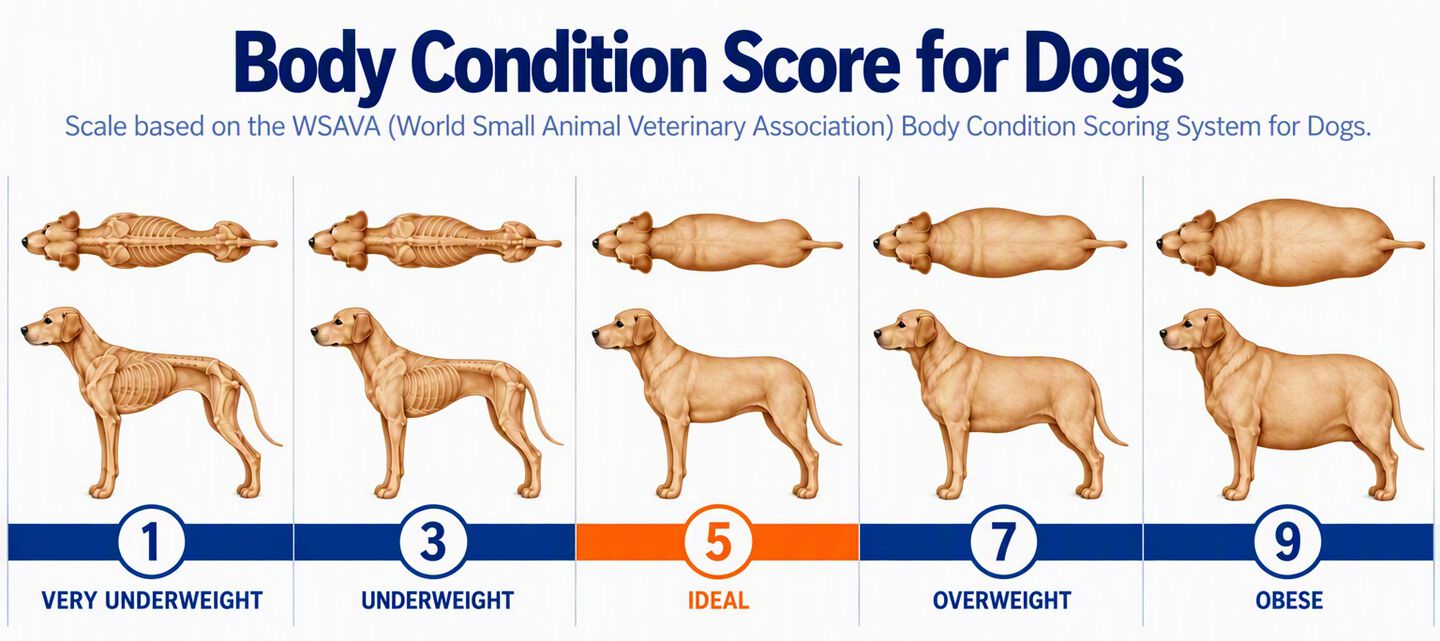
This scale includes the following body condition categories for dogs:
- Very undernourished
- Very thin
- Thin
- Slightly underweight
- Ideal
- Slightly overweight
- Overweight
- Obese
- Severely obese
Your dog is likely to have an ideal body condition (score 5) if you can easily feel the ribs without a thick layer of fat covering them. Viewed from above, the waist should be clearly visible behind the ribs; from the side, the abdomen should appear tucked up.
If you overfeed your canine companion, it may develop health problems such as obesity, diabetes, heart disease or respiratory disorders, as detailed by the European Pet Food Industry Federation (FEDIAF) in its 2025 article "Maintaining a Healthy Body Weight in Dogs".
On the other hand, if you do not feed your dog enough, its nutritional and energy requirements may not be met, putting it at risk of developing health problems resulting from nutritional deficiencies. In growing dogs, for example, a prolonged vitamin D deficiency may cause rickets. Likewise, a long-term imbalance between calcium and phosphorus can lead to nutritional secondary hyperparathyroidism, which may cause bone demineralisation and fractures.
Maintaining an appropriate body weight is one of the most important factors in supporting the long-term wellbeing and quality of life of dogs, according to FEDIAF.
Amount of food for dogs according to daily activity level
To make it easier to calculate how much food a dog should eat each day, feeding tables show recommended daily amounts in grams. These amounts are calculated for healthy dogs at their ideal weight according to their activity level. FEDIAF defines them as follows:
- Low activity (+): up to one hour of activity per day, such as walks on a lead.
- Moderate activity (++): 1 to 3 hours of activity per day. This may include low or high impact activities.
- High activity (+++): more than 3 hours and up to 6 hours of moderate activity per day. Working dogs, such as sheepdogs, are an example.
FEDIAF also recognises an additional extreme activity category for dogs participating in sled dog competitions in extremely cold conditions.
As explained in the FEDIAF article on body weight, "the amount of food should be adjusted according to the dog’s activity level, since a less active dog requires less energy and is more likely to gain weight if it continues to consume the same amount of food".
Information relating the dog’s size and weight to its daily activity level can easily be found on pet food packaging. If in doubt, it is advisable to consult a trusted vet.
Amount of food for dogs by age: puppy, adult and senior
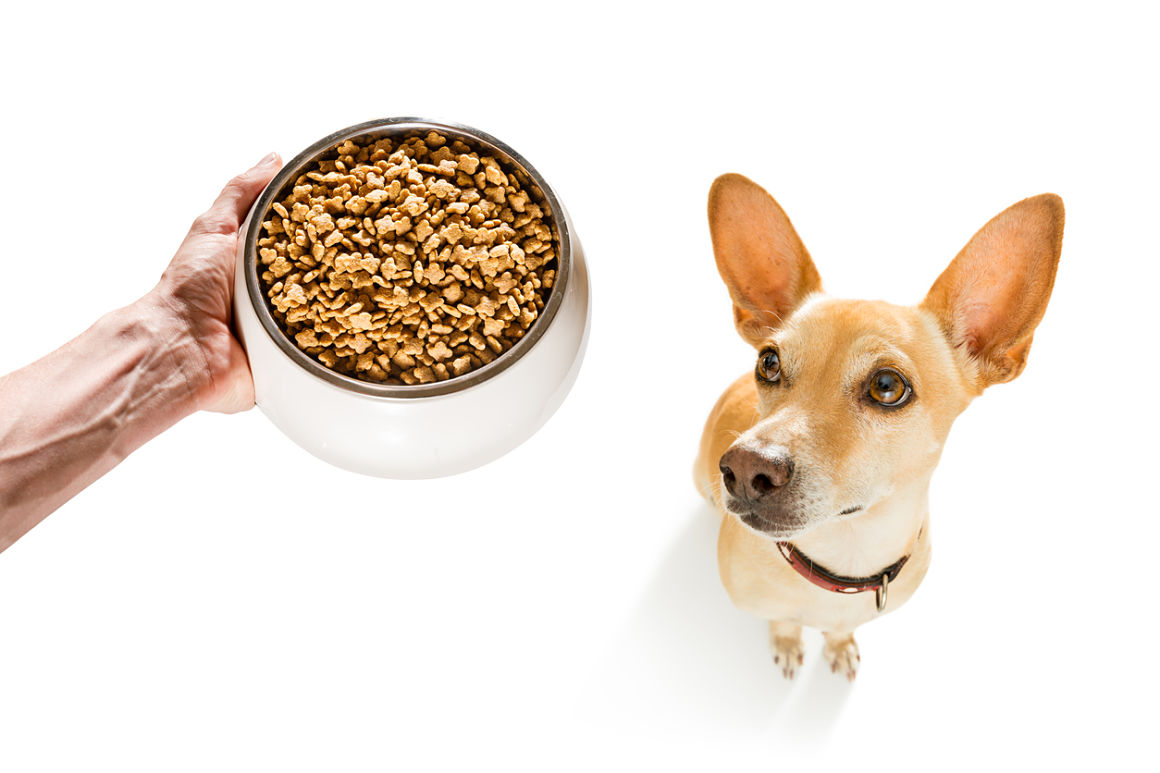
Quality nutrition and exercise are essential for maintaining your dog’s good health at any age. To feed your dog correctly, it is important to take its life stage into account, as detailed below:
IF YOUR DOG IS A PUPPY
The owner of a puppy over 2 months of age should bear in mind that the animal will require plenty of energy and essential nutrients to support its development.
In general, puppies should receive appropriate amounts of food according to their size, divided into 3 or 4 meals per day (depending on their size) until they reach 5 or 6 months of age. After this age, feeding frequency is usually reduced to two meals per day.
Considering this stage of life, it is important to know that Advance is the only brand that includes nucleotide compounds (elements that form part of the genetic material of cells) in its dry puppy food in the same proportion as those found in their mother’s milk.
These compounds are beneficial to your puppy’s health because they help:
- Support healthy growth;
- Stimulate the immune response.
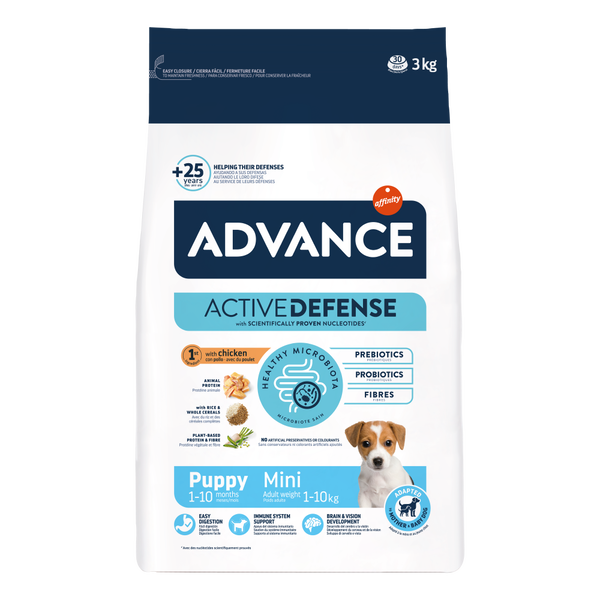
This means that the entire Advance dry puppy food range supports natural defences from the very first weeks of life. The table below shows the recommended daily amounts of dry food for mini-breed puppies:
Recommended Daily Feeding Amount - Puppy Mini
| Weight | 2 months | 4 months | 6–10 months |
|---|---|---|---|
| 1 kg | 20 g | 30 g | 30 g |
| 3 kg | 50 g | 65 g | 70 g |
| 5 kg | 75 g | 95 g | 100 g |
| 7 kg | 95 g | 125 g | 130 g |
| 10 kg | 115 g | 160 g | 170 g |
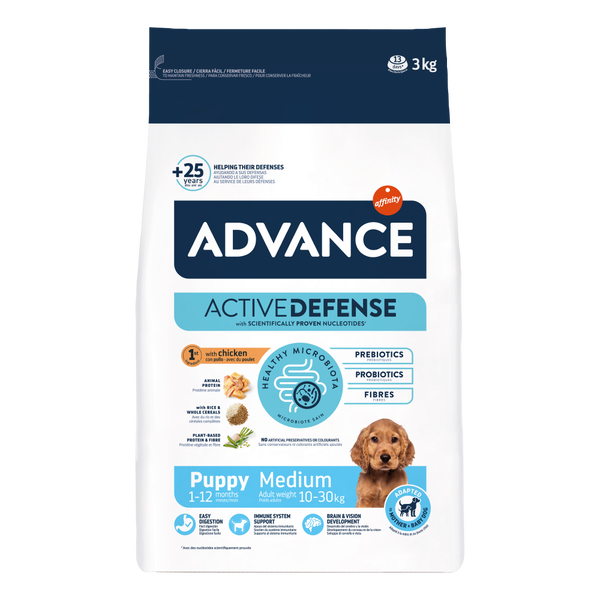
After 10 months of age, it is recommended that you switch to Advance Adult Mini dry food. If your puppy is a medium-sized breed, the recommendation in the table is as follows:
Recommended Daily Feeding Amount - Puppy Medium
| Weight | 2 months | 4 months | 6 months | 10 months | Up to 12 months |
|---|---|---|---|---|---|
| 10 kg | 115 g | 160 g | 170 g | 170 g | 170 g |
| 15 kg | 160 g | 215 g | 230 g | 230 g | 230 g |
| 20 kg | 170 g | 260 g | 285 g | 290 g | 285 g |
| 25 kg | 200 g | 310 g | 335 g | 340 g | 335 g |
| 30 kg | 220 g | 345 g | 380 g | 395 g | 390 g |
For medium-sized puppies aged 12 months and over, we recommend switching to Advance Adult Medium. Similarly, large or giant breed puppies expected to weigh 30 kg or more as adults have specific nutritional requirements as they grow. Below are the recommended daily feeding amounts:
Recommended Daily Feeding Amount - Puppy Maxi
| Adult Weight | 2 months | 4 months | 6 months | 10 months | 12 months | Up to 15 months |
|---|---|---|---|---|---|---|
| 30 kg (large breed) | 230 g | 355 g | 390 g | 405 g | 400 g | 395 g |
| 35 kg (large breed) | 255 g | 395 g | 435 g | 455 g | 450 g | 445 g |
| 40 kg (large breed) | 280 g | 440 g | 485 g | 505 g | 500 g | 490 g |
| 45 kg (large breed) | 310 g | 480 g | 530 g | 550 g | 545 g | 535 g |
| 50 kg (giant breed) | 255 g | 480 g | 550 g | 595 g | 595 g | 590 g |
| 60 kg (giant breed) | 295 g | 550 g | 630 g | 680 g | 680 g | 675 g |
| 70 kg (giant breed) | 330 g | 615 g | 705 g | 765 g | 765 g | 760 g |


IF YOUR DOG IS AN ADULT
When your dog is no longer a puppy, follow the feeding guide for adult dogs shown on the packaging, with the aim of maintaining an ideal body condition. Consider factors such as activity level, lifestyle and possible changes in health over time.
Advance Adult dry foods for everyday feeding are available according to:
- Size: Advance Adult is available for mini, medium and maxi dogs, with adapted kibble sizes and a feeding guide showing the recommended amounts for each size;
- Weight management: for dogs with a tendency to become overweight, there are options such as Adult Maxi Light, Advance Adult Light Medium and Advance Adult Mini Light, which include, among other features, a low-fat formula to help control weight;
- Specific breeds: it is also possible to choose Advance Adult products for certain breeds such as Yorkshire Terrier, French Bulldog, Labrador or Golden Retriever.
For more detailed information about the recommended amounts of dry food for adult dogs according to breed, size and weight, see the adult food products on our website.


IF YOUR DOG IS A SENIOR
From 6, 7 or 8 years of age, depending on size, dogs are considered senior and, at this new stage of life, some health problems may arise. “Increasing age can reduce your dog’s mobility and activity level, and dietary adjustments may be necessary to prevent weight gain”, as stated in the FEDIAF article.
This is precisely why products for senior dogs, such as Advance Vitality Senior dry food, are specially formulated to meet their energy requirements and provide benefits such as improved digestion and maintenance of muscle mass.
The table below shows the recommended amounts of dry food according to the size of your senior dog:
Mini dogs aged 8 years and over:
Recommended Daily Feeding Amount - Vitality Senior Mini +8
| Adult weight | Activity + | Activity ++ | Activity +++ |
|---|---|---|---|
| 1 kg | 25 g | 30 g | 40 g |
| 3 kg | 55 g | 70 g | 90 g |
| 5 kg | 80 g | 100 g | 130 g |
| 7 kg | 105 g | 130 g | 165 g |
| 10 kg | 140 g | 170 g | 220 g |
Medium dogs aged 7 years and over:
Recommended Daily Feeding Amount - Vitality Senior Medium +7
| Adult weight | Activity + | Activity ++ | Activity +++ |
|---|---|---|---|
| 10 kg | 140 g | 170 g | 220 g |
| 15 kg | 190 g | 230 g | 295 g |
| 20 kg | 235 g | 280 g | 370 g |
| 25 kg | 275 g | 335 g | 435 g |
| 30 kg | 315 g | 385 g | 500 g |
Large dogs aged 6 years and over:
Recommended Daily Feeding Amount - Vitality Senior Maxi +6
| Peso adulto | Actividad + | Actividad ++ | Actividad +++ |
|---|---|---|---|
| 30 kg | 325 g | 395 g | 515 g |
| 35 kg | 365 g | 440 g | 575 g |
| 40 kg | 405 g | 490 g | 640 g |
| 45 kg | 440 g | 535 g | 695 g |
| 50 kg | 480 g | 580 g | 755 g |
| 60 kg | 550 g | 665 g | 865 g |
| 70 kg | 615 g | 745 g | 970 g |
For dogs that require specific nutrients to support joint, cartilage and bone health, for example, there is the Advance Veterinary Diets range and products such as Advance Articular Senior (available as dry or wet food).


Why can Active Defense technology be so important for your dog?
Now that you know the main factors that help you determine how much to feed your dog, it is worth knowing that Advance dry food recipes contain our exclusive Active Defense technology.
- Advance dry food with Active Defense provides complete and balanced nutrition reinforced with scientifically proven ingredients (prebiotics, probiotics, fibres and immunoglobulins);
- The Active Defense formula contributes to the functioning of dogs’ natural defences, promoting a healthy gut microbiota and protecting them from the inside out;
- All Advance recipes are made with high-quality ingredients: animal protein as the first ingredient, rice, peas and whole grains, and no artificial preservatives or colourings.
Discover the full range of Advance products for dogs, including dry food, wet food, snacks and supplements developed using scientific expertise and backed by more than 25 years of experience in pet food manufacturing.