How many times a day should a cat eat at each age? 6 facts you need to know
Minutes reading
Published on 09.10.2026 · Edited on 09.10.2026Understanding what a cat eats and how much food it should eat each day is essential to ensuring a good quality of life for your feline companion.
How many times a day a cat eats food depends on the cat’s age, weight, health status and daily activity level. However, the quality of the ingredients in your pet’s diet remains essential to properly meeting its nutritional needs, supporting its long-term wellbeing and helping you enjoy many happy years together.
Below, discover how to provide your cat with the support it needs to meet its nutritional requirements properly. Doing so also helps strengthen the bond between you and your pet.
What does a cat eat?
As obligate carnivores, cats have a metabolism that prioritises protein as an essential part of their diet. “They evolved as hunters that fed on prey rich in protein and moderate in fat,” explains the article How Often Should You Feed Your Cat? published by the Cornell University College of Veterinary Medicine in the United States.
For this reason, cats can benefit from recipes made with high-quality protein sources, with chicken or salmon as the first ingredient, as is the case with some Advance cat foods.
However, each stage of a cat’s life has different nutritional requirements and requires food specifically designed for that life stage. If your cat is neutered, for example, it may experience an increased appetite and ask for more food than it actually needs. Therefore, it is essential to provide food that is adapted to each animal’s energy requirements.
How many times should a kitten eat?
According to a Cornell University publication, “kittens require more food per kilogramme of body weight to grow than adult cats and therefore need to be fed more frequently throughout the day”.
For this reason, the source continues, “up to six months of age, kittens generally do best when fed three meals a day. Between six months and one year of age, feeding them twice a day is generally recommended.”
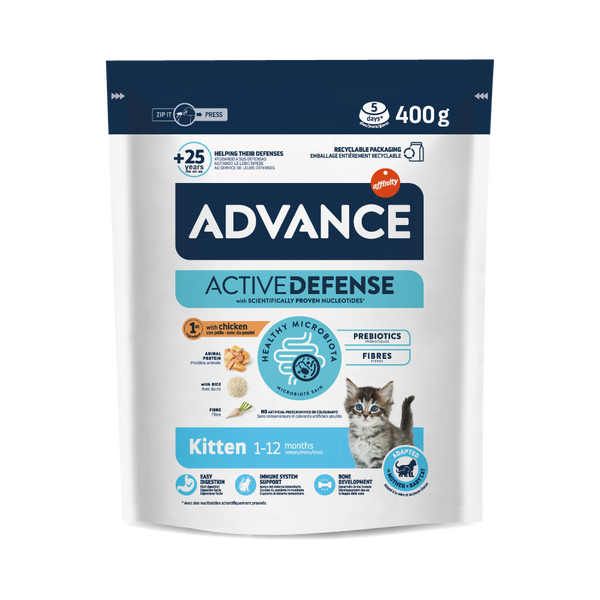
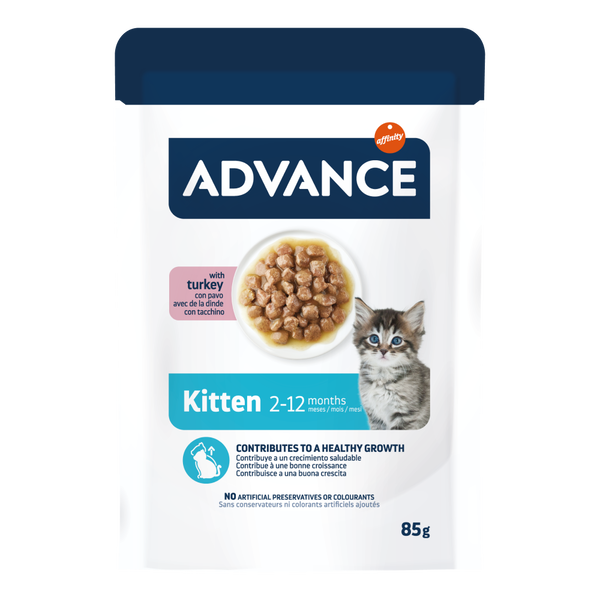
A specially formulated diet for this stage of life helps support proper musculoskeletal and cognitive development. Therefore, their diet should contain all essential nutrients, including protein, amino acids, vitamins and minerals. With Advance Kitten dry food, we recommend the following feeding amounts for kittens.
Daily amount of dry food for kittens
| Sex | Age | Daily amount of dry food |
|---|---|---|
| Female | 2–3 months | 40–45 g per day |
| Female | 4–5 months | 50–55 g per day |
| Female | 6–12 months | 55–60 g per day |
| Male | 2–3 months | 45–55 g per day |
| Male | 4–5 months | 65–70 g per day |
| Male | 6–12 months | 70 g per day |
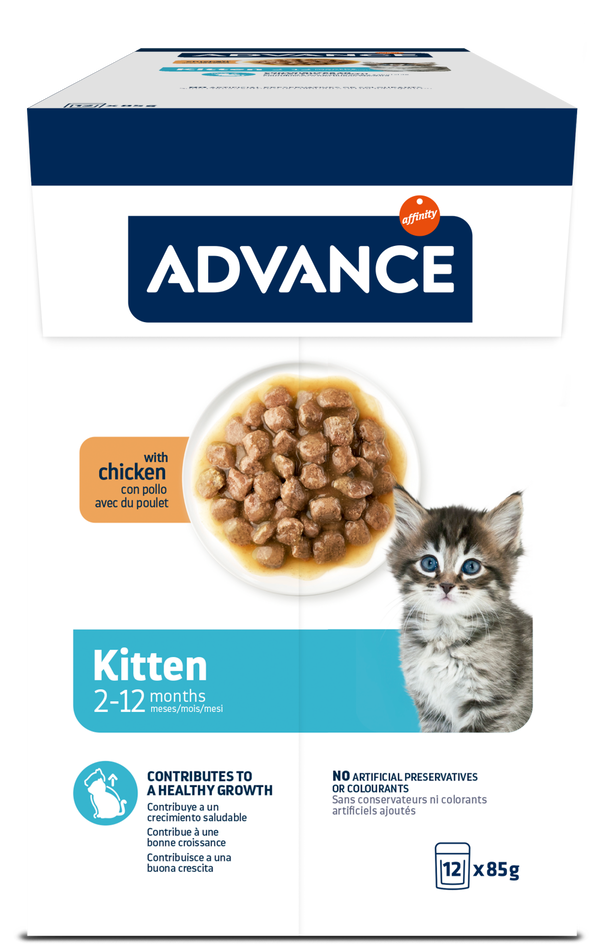
For those who wish to include wet food in their kitten’s daily meals and combine dry and wet feeding, Advance recommends adding 1 pouch of wet food per day, adjusting the dry food quantity according to the table below.
Kitten age and daily mixed-feeding ration*
| Kitten age | Daily mixed-feeding ration* |
|---|---|
| 2–3 months | 1 pouch of wet food + 20–40 g of dry food |
| 4–5 months | 1 pouch of wet food + 35–50 g of dry food |
| 6–12 months | 1 pouch of wet food + 40–50 g of dry food |
Mixed feeding can provide a greater variety of flavours and additional moisture in a kitten’s diet. At Advance, you can choose between Kitten Turkey Chunks in Gravy or Kitten Chicken Chunks in Gravy as the wet food option to combine with dry food and provide a mixed-feeding routine.
It is worth remembering that these quantities are intended as guidelines and may vary depending on individual factors such as weight, activity level, growth rate and body condition. Therefore, it is important to monitor your kitten’s physical condition regularly and adjust the ration when necessary to support healthy growth.
The next step is to consider the effects of neutering when changing your cat’s diet, as neutering can significantly influence its lifestyle. According to experts at the Royal Veterinary College, University of London, kittens can reach sexual maturity between 4 and 12 months of age. In females, this process may be marked by the onset of the first season. For this reason, neutering is generally recommended from 6 months of age.
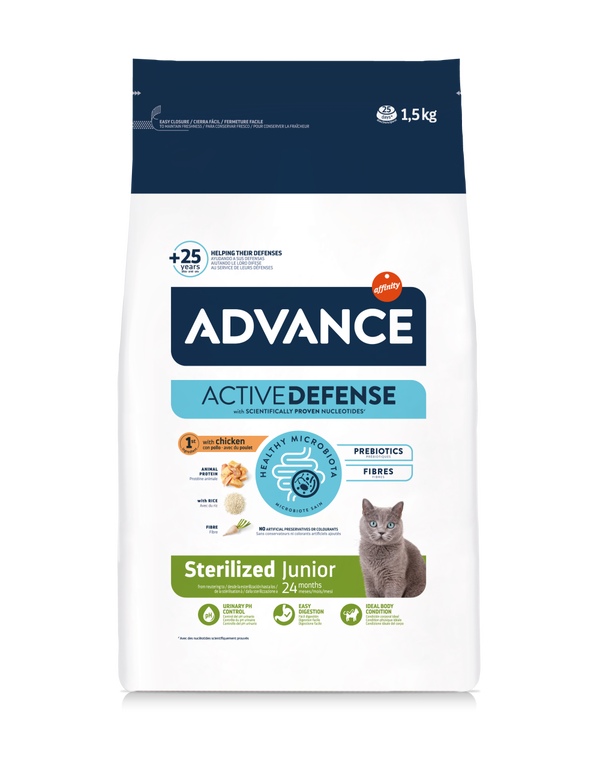
Therefore, if you neuter your cat while it is still a kitten, rather than an adult, as cats generally reach adulthood at around 12 months of age, you may switch to a product better suited to this stage of life, such as Advance Sterilized Junior dry food.
In contrast, non-neutered kittens should continue eating dry food or wet food from the kitten range until they reach 12 months of age and then switch to Advance Adult, which is intended for adult non-neutered cats.
How often should a young neutered cat eat?
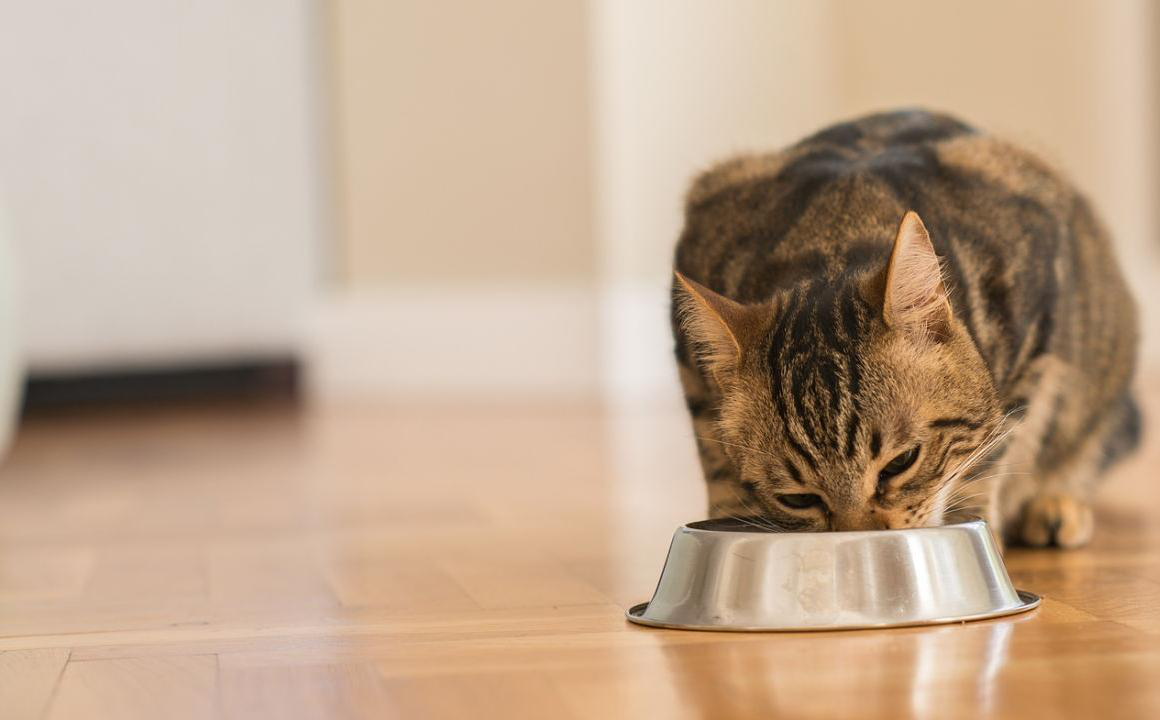
Following neutering, which is usually performed at around 6 months of age, young cats may switch to a diet tailored to their new needs, and continue receiving one or two meals per day, with the daily amount adjusted according to their age, sex and expected adult body weight during growth.
In this regard, feeding amounts differ between young male and female cats, so it is recommended to consult the guide on each pack.
- Female cats: Neutered cats aged 12–14 months with an expected adult body weight of 2.6–3.5 kg should eat 45–50 g of food per day.
- Male cats: Neutered cats aged 12–14 months with an expected adult body weight of 3.5–4.8 kg should eat 50–65 g of food per day, according to the feeding guide.
Quantities for young neutered cats
| Sex | Age | Expected adult body weight | Recommended daily amount |
|---|---|---|---|
| Female | 12–14 months | 2.6–3.5 kg | 45–50 g per day |
| Male | 12–14 months | 3.5–4.8 kg | 50–65 g per day |
Advance offers a product specially formulated for young, neutered cats: Advance Sterilized Junior dry food. It is an easily digestible food that helps maintain an ideal weight thanks to its protein and calorie profile.
It also helps control urinary pH due to its balanced mineral content and features a smaller kibble size adapted to the jaws of young cats.
How often should a neutered adult cat eat?
Cats are considered adults from 12 months of age, when growth is usually complete and their nutritional requirements shift to maintenance. Neutered males and females may have different activity levels, which affects the amount of food they should receive. For this reason, it is always recommended to consult the feeding guide on the packaging, particularly when combining dry and wet food.
It is important to monitor portion sizes. According to the feeding guide for Advance Sterilized Adult dry food, a food specifically formulated for this life stage, the recommended amounts are:
Recommended daily ration – Advance Sterilized Adult
| Adult weight | Activity + / grams per day | Activity ++ / grams per day |
|---|---|---|
| 2 kg | 35 g | 40 g |
| 4 kg | 55 g | 65 g |
| 6 kg | 70 g | 85 g |
| 8 kg | 85 g | 100 g |
When choosing dry food for your neutered adult cat, it is worth remembering that Advance Sterilized Adult is made with chicken as the first ingredient and features a kibble size adapted to the jaws of adult domestic cats. It is also formulated with some of the specific needs of neutered cats in mind:
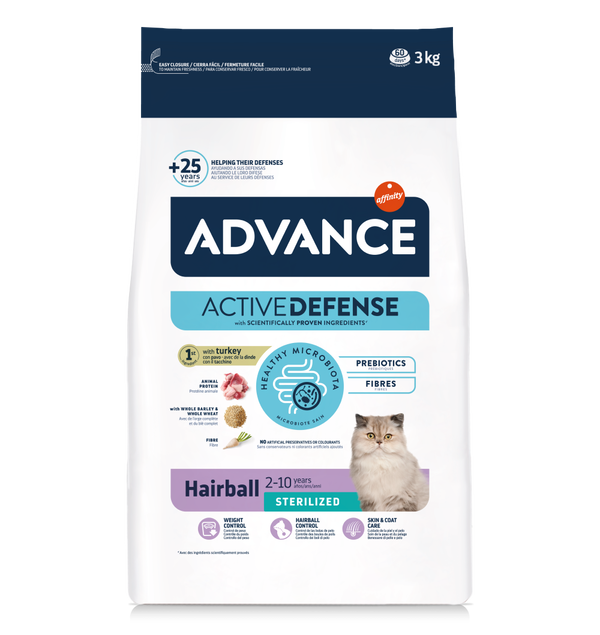
- If your cat needs help controlling hairballs, Advance Sterilized Adult Hairball can help, as its high fibre content supports hair elimination and helps reduce hairball formation.
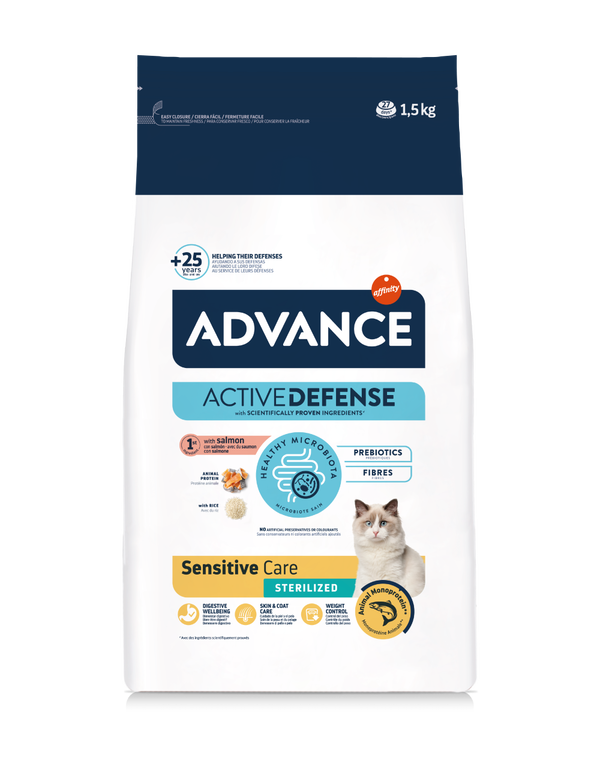
- If your cat has digestive sensitivities, Advance Sterilized Adult Sensitive Care may be beneficial, as it is specifically formulated to support digestion in neutered adult cats.
In addition to providing balanced and healthy nutrition, Advance Sterilized Adult dry food offers the following benefits:
- Excellent taste, thanks to highly palatable ingredients;
- Urinary pH control, through balanced mineral levels that help maintain optimal urinary pH;
- Skin and coat care, thanks to omega-3 and omega-6 fatty acids and zinc;
- Active Defense technology, our exclusive, scientifically proven formula for cats, enriched with fibres and prebiotics.
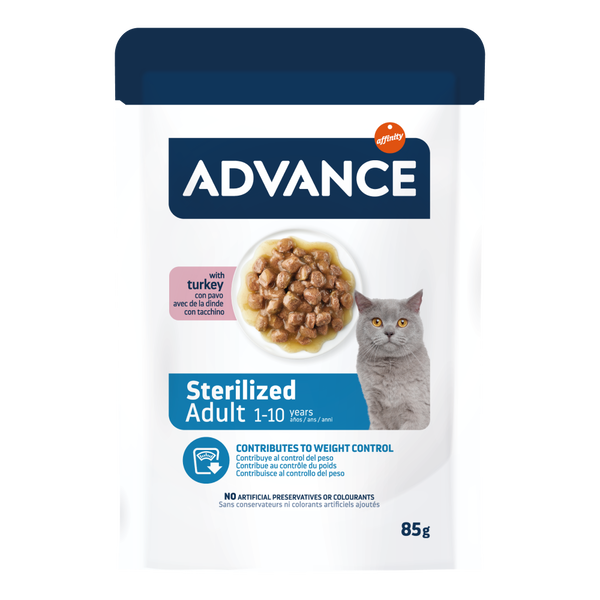
If you would like to combine dry and wet food (mixed feeding) or feed your cat exclusively with wet food, it is important to pay attention to the recommended quantities. For neutered adult cats, the following portions are recommended if you decide to include Sterilized Adult Turkey Chunks in Gravy or Sterilized Adult Cod Chunks in Gravy in the diet.
Recommended daily amount of Advance wet food
| Adult weight | Wet food only | Mixed feeding (wet food + dry food) |
|---|---|---|
| 2–4 kg | 2–3 pouches | 1 pouch + 15–30 g dry food |
| 4–6 kg | 3–4 pouches | 1 pouch + 30–45 g dry food |
| 6–8 kg | 4–4.5 pouches | 1 pouch + 45–60 g dry food |
Advance wet food is a complete and balanced food specifically formulated to meet the needs of neutered adult cats. Its formula has been developed by nutrition experts to help control your cat’s weight and support muscle mass maintenance. Advance Chunks in Gravy are recommended for neutered cats from one year of age.
These quantities are intended as guidelines and may vary depending on individual factors such as body condition, physical activity level and metabolism. Therefore, it is advisable to monitor your cat’s weight regularly and adjust the ration when necessary to maintain a healthy body condition.
Non-neutered adult cats: what changes in the feeding amounts?
For adult cats that have not been neutered, there are several recommendations that owners should take into account. Because their sex hormones still regulate metabolism and the way body fat is distributed, they tend to be more active than neutered cats.
For this reason, you should focus on providing the correct daily food amount and ensuring the quality of the food offered. You should also check whether both the dry food and wet food are 100% complete and balanced, or whether either is a complementary food.
If you offer snacks, it is not recommended to exceed the maximum feeding amount advised, to prevent the cat from becoming full on snacks and then failing to eat its main meal, which is what will meet its daily nutritional requirements.
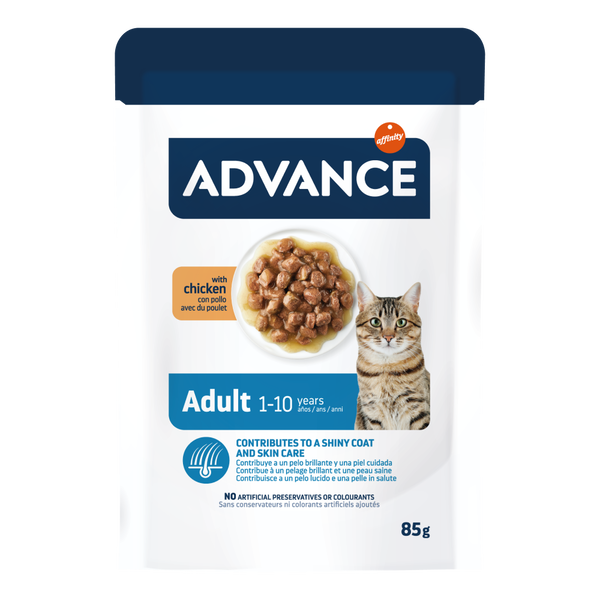
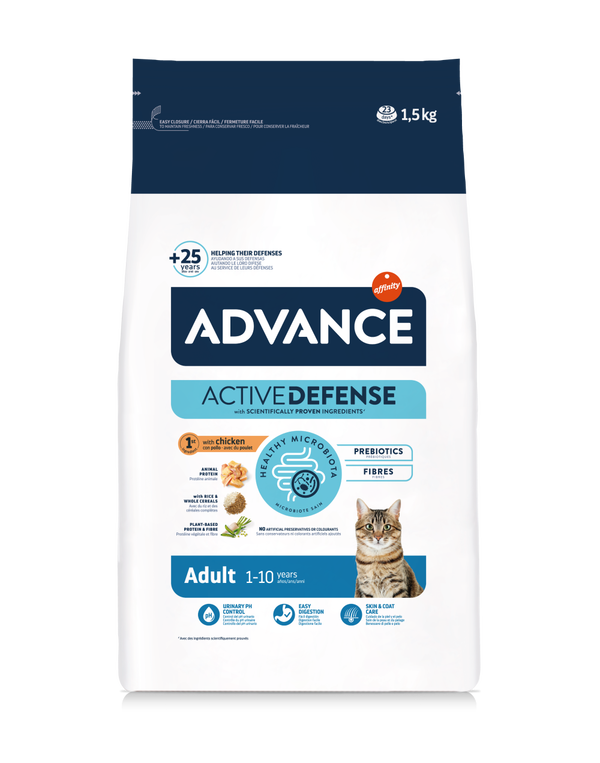
At Advance, both Advance Adult dry food, which features Active Defense technology, and Adult Chicken Chunks in Gravy wet food are complete foods and may be offered at each daily meal. These products help to:
- Maintain muscle mass thanks to their high protein content;
- Promote a shiny coat and support skin health thanks to omega-6 and omega-3 fatty acids, as well as zinc;
- Offer an excellent combination of flavour and texture that encourages food acceptance.
Advance products for adult cats are specifically intended for non-neutered cats from one year of age. The recommended feeding amounts can be found on our website and on product packaging, but you may also follow the guidelines below.
Recommended daily amount of Advance Adult dry food
| Adult weight | Activity + | Activity ++ |
|---|---|---|
| 2 kg | 35 g | 40 g |
| 4 kg | 55 g | 65 g |
| 6 kg | 70 g | 85 g |
| 8 kg | 85 g | 100 g |
It is also possible to choose a mixed-feeding approach with Advance products for non-neutered adult cats.
Recommended daily amount of Advance wet food
| Adult weight | Wet food only | Mixed feeding (wet food + dry food) |
|---|---|---|
| 2–4 kg | 2.5–3.5 pouches | 1 pouch + 20–45 g dry food |
| 4–6 kg | 3.5–5 pouches | 1 pouch + 45–65 g dry food |
| 6–8 kg | 5–6 pouches | 1 pouch + 65–80 g dry food |
How often should a senior cat eat?
Older cats can greatly benefit from a diet specifically designed for them, rich in energy and essential nutrients such as protein, glucosamine and chondroitin, and with a low phosphorus content to support healthy ageing.
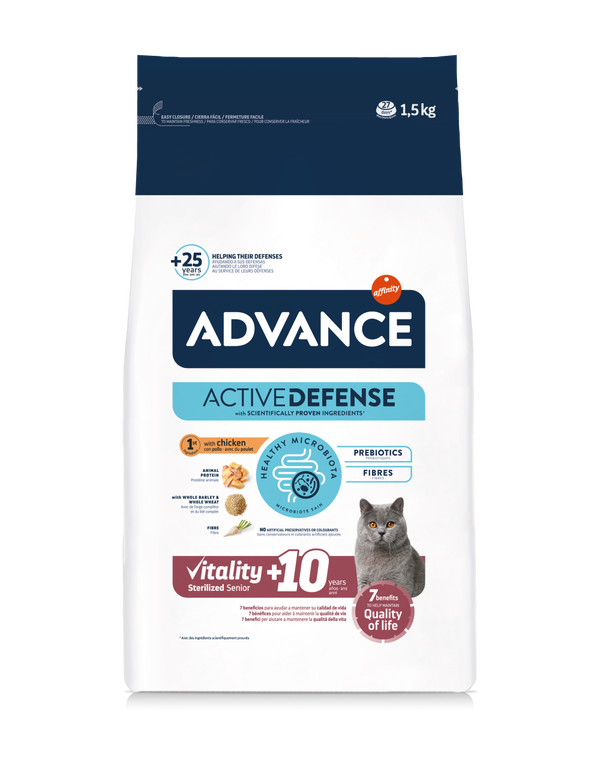
For this reason, Advance offers a dry food specially formulated for this stage of life. Advance Sterilized Senior +10 provides key benefits for older domestic cats, helping to maintain muscle mass, support joints and bones, and contribute to managing kidney workload.
The nutritional guide for Advance Sterilized Senior +10 recommends the following feeding amounts according to body weight, which can be divided into one or several meals throughout the day:
Recommended daily ration – Advance Sterilized Senior +10
| Adult weight | Grams per day |
|---|---|
| 2 kg | 35 g |
| 4 kg | 55 g |
| 6 kg | 70 g |
| 8 kg | 85 g |
Advance dry food for senior cats also contains Active Defense technology, our formula with scientifically proven ingredients, enriched with fibres and prebiotics to maintain a healthy gut microbiota from the inside. In addition, it is easy to digest, and its kibble size is adapted to the jaws of cats over 10 years old.
“Thanks to better nutrition, indoor lifestyles and advances in veterinary medicine, cats live longer and are now considered senior from 12 or 14 years of age,” explains Richard Goldstein, Doctor of Veterinary Medicine and Associate Professor of Small Animal Medicine at Cornell University College of Veterinary Medicine, on the institution’s official page dedicated to senior cats.
If you still have questions about the amount of food you should offer your cat at each stage of life, consult your trusted veterinarian. Remember that diet quality is also key to maintaining your feline companion’s health and vitality.
At Advance, our recipes are made with high-quality ingredients to provide appropriate nutrition, and we use technology to deliver the best possible benefits for companion animals.